The short answer
AI lead response is the use of AI agents to contact inbound leads within seconds of arrival, hold the first qualifying conversation by phone or text, route the outcome, and book appointments. Teams deploy it because qualification odds collapse within the first hour after an inquiry.
Key takeaways
- HBR's audit of 2,241 companies found an average lead response time of 42 hours; 23% never responded at all.
- Contact attempts inside the first hour qualify leads at roughly seven times the rate of attempts an hour later.
- A sub-minute autoresponder loses to a phone call that arrives three minutes later; the first touch has to hold a conversation.
- Wire triggers, script four qualifying questions, define the handoff, and pilot on one lead source before expanding.
- AI voices count as artificial voices under the TCPA, so lead forms need explicit consent language.
AI lead response is the use of AI agents to contact inbound leads the moment they arrive, hold the first conversation, and move qualified prospects to a booked next step without waiting for a person to be free. A form fill, a quote request, or a missed call triggers the system; within seconds the lead gets a phone call or a text, the agent asks qualifying questions and answers the lead's own, and the outcome lands in your CRM with a recording and a disposition.
The category exists because the leads were already there and the response wasn't. Harvard Business Review's audit of 2,241 U.S. companies sent each one a web lead and timed the reply: the average response took 42 hours, and 23% never responded at all. Those companies had paid for every one of those leads.
What counts as AI lead response#
AI lead response works inbound interest. Someone found you, raised a hand, and started a clock. The system's whole job is to turn that hand-raise into a two-way conversation before the lead's attention moves on, then qualify, route, and book inside that conversation.
Two neighboring categories share the vocabulary and muddy the shopping process:
- Lead generation software finds and enriches prospects who haven't contacted you. Plenty of tools ranking for "lead response" are really list-building platforms. A response system sources nobody; it converts the interest your marketing already earned.
- AI outbound calling dials lists and past databases on your schedule. Same conversational technology, opposite trigger: outbound starts with your list, response starts with the lead's action. Most teams eventually run both, but the response layer is where the money leaks first.
One more line worth drawing. An email autoresponder or a "thanks, we'll be in touch" text is acknowledgment, and acknowledgment converts nobody. If the instant touch can't ask a question and hear the answer, you've automated the receipt while the sale sits on the timer.
Why the first minutes decide the outcome#
The same HBR research measured what speed is worth: teams that attempted contact inside the first hour qualified the lead at roughly seven times the rate of teams that started an hour later, and the advantage over a next-day response was larger still. The lead who just submitted a form is at peak attention. They're on your site, the problem is in front of them, and they often sent the same request to your competitors in the same sitting.
Knowing this has never been the problem. Teams respond slowly for structural reasons:
- New leads land in a shared inbox or a CRM view that someone has to be looking at.
- Assignment waits on a round-robin, and the assignee is on a call, in a showing, or asleep.
- Inquiries arrive at 9 p.m. and on weekends, when nobody is staffed to respond.
- Reps prioritize scheduled work over interrupts, which is rational for them and expensive for you.
Effort doesn't fix any of those. Coverage does, which is why the fix is a system that responds the same way at 2 a.m. Sunday as it does at 10 a.m. Tuesday.
Manual and AI response, side by side#
| Manual response | AI lead response | |
|---|---|---|
| First response time | Minutes to days, depending on staffing | Seconds, every time |
| Coverage | Business hours, minus busy stretches | 24/7 including weekends |
| First touch | Often an email or a voicemail | A live two-way conversation |
| Consistency | Varies by rep and by day | Same questions, every lead |
| Cost of more volume | Rises with headcount | Rises with usage, far more slowly |
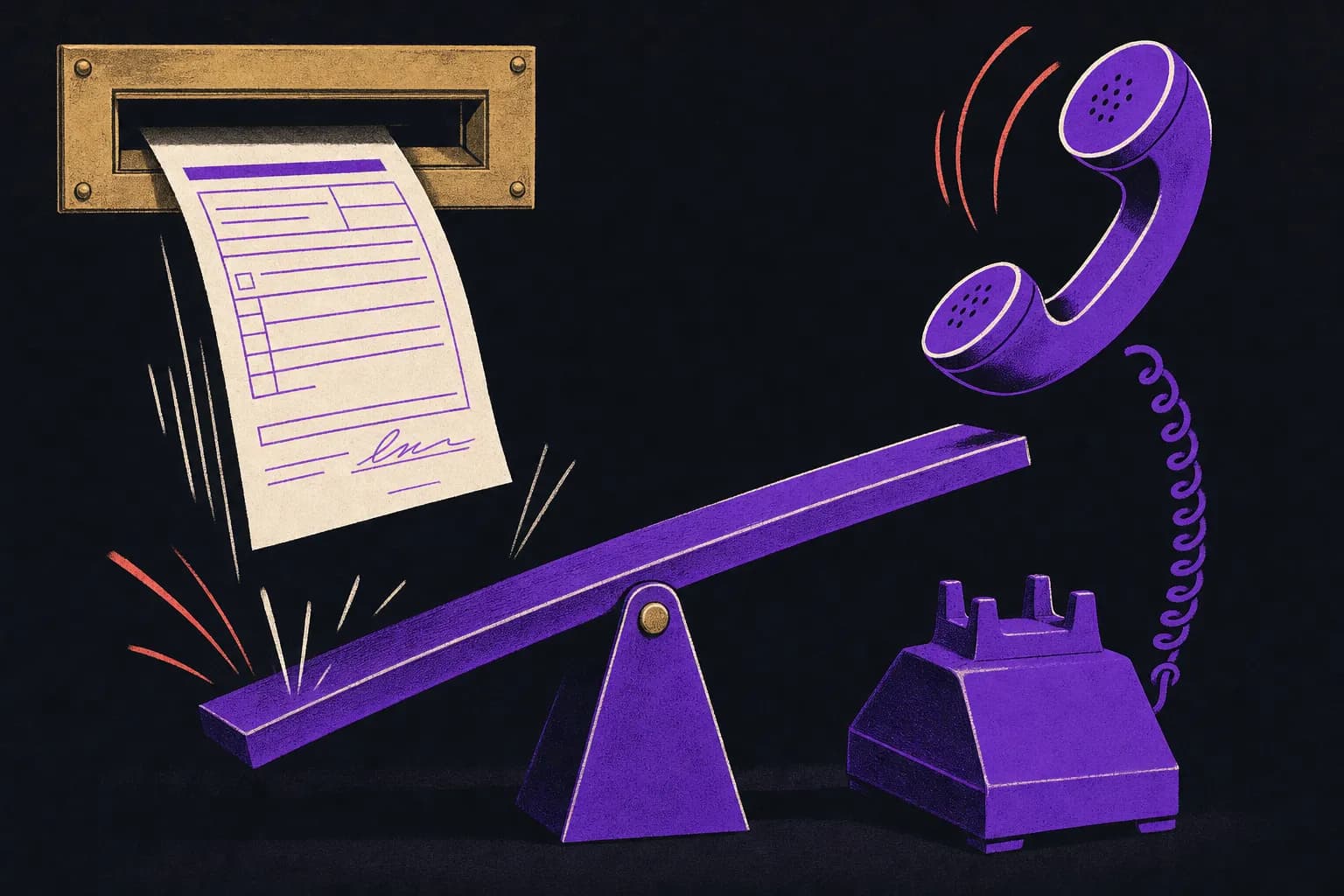
The middle row is the one buyers skip past. Response time gets the attention, but what the instant touch consists of decides whether speed pays: a sub-minute autoresponder email loses to a three-minute-later phone call every time.
What a complete system does between the form and the calendar#
Capture. The system watches every source where leads arrive: website forms, landing pages, missed inbound calls, portal notifications, and new records in the CRM. This is webhook and CRM integration plumbing, and it's worth checking a vendor supports your exact sources before anything else, because a response system that sees only half your leads is half a system.
First conversation in seconds. For a phone lead, that means an outbound call placed immediately, with a text as the fallback when nobody answers. Voice is the high-bandwidth channel: a call can ask follow-ups, handle "how much does it cost", and close for an appointment in one session, where a text thread strings the same exchange across an afternoon.
Qualification inside the call. The agent collects the three or four answers that separate a buyer from a browser: what they need, when, their budget or means, and who decides. The mechanics of scoring versus conversational qualification are their own subject; we covered them in the AI lead qualification guide.
Routing and booking. Qualified leads book directly onto a calendar with live availability. Leads that need a human get warm-transferred or turned into a task with the transcript attached. Leads that turn out to be vendors, spam, or wrong numbers get logged and closed so nobody works them twice.
Retries and follow-up. First attempts often land in voicemail, so the system runs a multi-day cadence: leave a voicemail, text, call again the next day at a different hour, and mark the record dead only after the cadence is spent. This is where automated lead follow-up stops being a rep's memory and becomes a schedule.
Writeback. Every attempt, recording, transcript, and disposition lands in the CRM automatically. If the record of the touch depends on a rep remembering to log it, the cadence above quietly stops existing.
How to set up automated lead response in five steps#
- Measure the baseline. Pull the last 90 days of leads and timestamp the gap between arrival and first human touch, per source. Medians by hour of day tell you exactly where response is dying. Nights and weekends are the usual answer.
- Wire the triggers. Connect the sources from step 1 so a new lead starts the response automatically, either instantly or after a short delay if you want a human to get the first shot during office hours.
- Script the questions the first conversation must answer. Four is a good ceiling. Write them in your language for your market, then decide what "qualified" means in terms of the answers, so routing is a rule instead of a mood.
- Define the handoff. Which outcomes book a calendar slot, which transfer live, which create tasks, and what travels with each: the source, the lead's answers in their own words, and whatever the agent promised next. A transfer without that context makes the person who takes it start the conversation over.
- Pilot on one source and read the transcripts. Run two weeks on your highest-volume form, read every transcript weekly, tighten the script, then expand source by source. The transcripts will teach you more about your lead flow than the dashboard will.

Put a voice on your next form fill
Rezora IO answers a new inbound lead with a live phone call in seconds, qualifies what they need and when, and books the appointment while your competitors' autoresponders are still confirming receipt. Book a demo and time it yourself.
Book a demoOperating rules that keep speed useful#
Aim under a minute on your own inbound. The five-minute rule from the research era is a ceiling. When the lead is on your website right now, a call that arrives while the page is still open reads as service; the same call four hours later opens with an apology.
Persist past the first attempt. One try and a shrug wastes the speed you just bought. Spread five to seven attempts across several days, vary the hour, and alternate channels so a missed call is followed by a text that gives the lead a reason to answer next time.
Respect the channel. Blasting a simultaneous call, text, and email on every trigger reads as desperation. Lead with the channel that matches the source: a phone lead gets a call, a chat lead gets a message, and the second channel enters when the first goes unanswered.
Rezora point of view
Consent and disclosure are part of the build, not a legal afterthought. The Telephone Consumer Protection Act (47 U.S.C. § 227) restricts calls made with an artificial voice absent prior express consent, and an AI voice agent is an artificial voice under the FCC's reading. Put consent language on every lead form, have the agent disclose it's an AI, and honor opt-outs immediately. Keep the records that prove each lead asked to be contacted; the consent is only as good as your ability to show it.
Keep humans on judgment calls. Pricing exceptions and emotionally loaded conversations should route to a person early. The system's value is covering the predictable first contact at any hour, which buys your best people the time to be good at the exceptions.
Watch three numbers. Median time to first conversation (a completed exchange, since attempts are free), contact rate within 24 hours, and qualified appointments per 100 leads. If the first number drops and the third doesn't move within a month, the leak is in your script or your routing, and the transcripts will show which.
Where Rezora IO fits#
Rezora IO is the conversation layer of the system this guide describes. A new lead from your form or your CRM gets a live phone call within seconds, and the voice on that call comes from models Rezora IO trains itself, using supervised fine-tuning and preference optimization on real sales conversations. Most platforms in this category prompt a general-purpose model and hope; the trained approach is why the agent handles "just email me the price" without stalling.
There's nothing to prompt and nothing to build. Connect HubSpot, GoHighLevel, or a webhook, pick a voice and a template, and the agent qualifies, books onto your calendar through live availability lookup, runs the retry cadence on no-answers, and writes notes, dispositions, and tasks back to the CRM in both directions. AI disclosure and consent gates are enforced in the product itself. The deepest pre-trained call corpora today are real estate and home services, which is evidence of how the training method compounds; enterprise plans apply the same custom training to any industry on your own call data.
Pricing is public and short: $289 per month, month to month, plus $0.20 per conversational minute, counted only while the agent is talking with someone. Details are on the pricing page.
AI lead response FAQ#
What is a good lead response time?#
Under five minutes keeps you inside the window the research rewards, and under one minute is the right target for leads from your own website, since the lead is often still on the page. HBR's audit found the average company took 42 hours, so even a modest automation clears the field.
Will an instant AI call put leads off?#
Timing does the opposite: the call arrives while the lead's interest is at its peak, and answering their questions immediately is what they hoped would happen. What puts leads off is a robotic voice or a hidden one. Use an agent that sounds natural, discloses that it's an AI, and hands off to a human the moment the conversation needs one.
Do I need consent for an AI agent to call my own inbound leads?#
Yes. The TCPA counts an AI voice as artificial, which means your forms need consent language covering automated and AI calls, and your records need to show it. A lead who requested contact puts you in the strongest position, but the paper trail still has to exist, and every opt-out has to stick.
How is AI lead response priced?#
Most platforms charge a monthly base plus per-minute usage for the calling itself. Rezora IO publishes one plan at $289 per month plus $0.20 per conversational minute on its pricing page. When comparing vendors, ask how a "minute" is counted; billing that runs during ringing and voicemail adds up on exactly the no-answer-heavy traffic a response system exists to work.