
The short answer
An AI voice agent can't legally cold call a skip-traced seller list; artificial-voice calls to consumer cells require prior express consent. Wholesalers who profit from voice AI run it on inbound calls, web leads, follow-up, and their own database, and keep human callers on true cold outreach.
Key takeaways
- The FCC treats AI voices as artificial under the TCPA, so cold AI calls to skip-traced cell lists risk $500 to $1,500 per call.
- AI earns its keep where consent exists: inbound answering, instant web-lead callback, follow-up cadences, and database reactivation.
- A Mojo triple-line dialer seat is $139 a month before wages; Rezora IO is $289 a month plus 20 cents per conversational minute.
- Most wholesale contracts surface in follow-up weeks after first contact; a cadence that never forgets beats a bigger cold list.
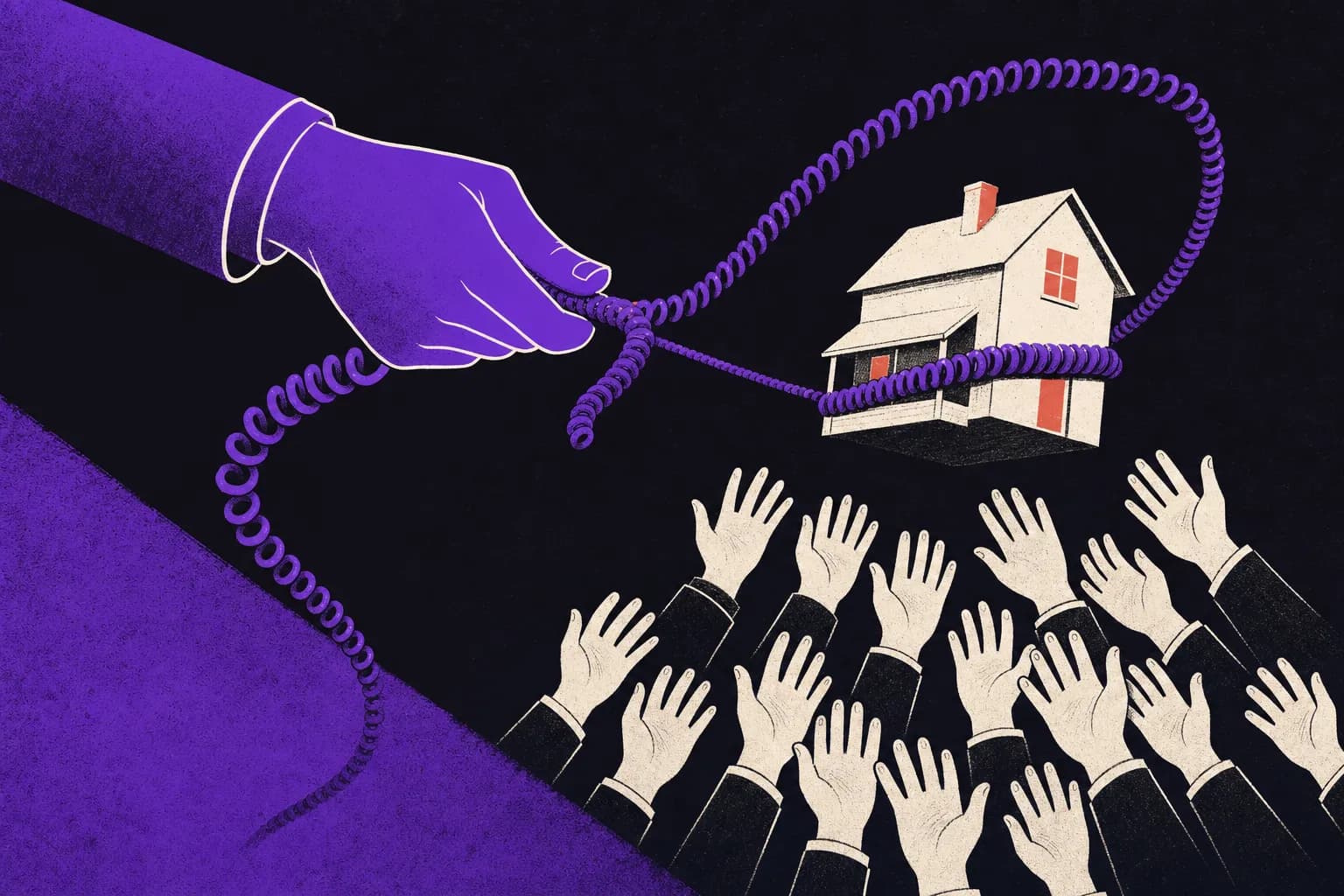
Every wholesaler evaluating AI cold calling has seen some version of the same demo: upload the skip-traced list you pulled last week, retire the dialer team, and let a voice agent work 5,000 sellers before Friday. It is a compelling pitch, and for the list in that demo it describes a campaign federal law does not allow. An AI voice calling a cold consumer cell phone without consent is the specific thing the FCC moved to shut down in 2024.
That does not make the technology useless for wholesaling. It makes the pitch wrong about which lane the technology belongs in. The operators getting value out of voice AI run it where consent already exists: on inbound calls, web leads, follow-up, and their own aged database. Human callers keep true cold outreach. Everything else about the setup, including what it costs and where the contracts come from, follows from that split.
Three products hide under one label#
When a vendor says AI cold calling, they mean one of three things, and the legal and practical answers differ for each.
An autonomous voice agent places or answers calls and holds the conversation itself. Nobody is on your side of the line. It asks the questions, handles the pushback, and books the appointment or logs the disposition.
An AI-assisted dialer keeps a human doing the talking and uses software to remove the dead time: multi-line dialing, answering machine detection, live transcription, note taking. This is the category most established wholesaling operations already run, and because a person speaks on every connect, the rules that govern artificial voices do not apply to the conversation itself.
An inbound AI receptionist answers the phone when a seller calls you back from a postcard, a bandit sign, or a missed call, at any hour, and qualifies them on the spot.
Buyers get burned by pricing one category while imagining another, so keep the three separate. For the general mechanics of how these agents work under the hood, the AI cold calling agent guide covers the market beyond wholesaling.
The law splits your lead stack in two#
The Telephone Consumer Protection Act restricts calls made with an artificial or prerecorded voice, and in February 2024 the FCC ruled that AI-generated voices are artificial voices under the statute. Calling a cell phone with an artificial voice requires prior express consent, and for marketing calls the standard is prior express written consent. The statute lets a consumer sue for $500 per violating call, tripled to $1,500 when the violation is willful, with no cap on how many calls a campaign made.
Now apply that to a wholesaler's lead stack. A skip-traced pre-foreclosure list is, almost by definition, a pile of consumer cell numbers belonging to people who have never heard of you. No consent exists. An autonomous AI agent dialing that list cold is a TCPA violation repeated a few thousand times over. The B2B carve-outs that soften this picture in other industries do not help you; the person selling a house is a consumer.
The other half of the stack looks completely different:
- Inbound callers. A seller who dials your number from a sign or a mailer initiated the contact. An AI can answer, disclose that it is an AI, and qualify.
- Web and PPC leads. A web form where the lead agrees to receive calls placed by automated or AI technology captures the written consent the rules ask for. The lead who submits it can be called by an agent seconds later.
- Your own database. Leads your operation generated, spoke with, and holds consent records for can be re-engaged. This is where aged lists earn a second life.
- DNC scrubbing still applies everywhere. Consent does not override the National Do Not Call Registry obligations for marketing calls, and a documented internal DNC list is table stakes.
If a demo shows an autonomous agent dialing a purchased list cold, the product on screen is a liability with good voice quality, and buying it is buying the lawsuit along with the software. Ask the vendor how they gate consent before a campaign launches. The ones building for wholesalers who plan to still be operating in three years have an answer.
The split operation: AI where consent lives, humans on true cold#
Four lanes go to the machine. One stays human.
Inbound answering. Direct mail, bandit signs, and driving for dollars all convert through a phone that rings at 7:40 pm on a Sunday. Every missed callback is marketing spend you already paid evaporating. An inbound agent answers every one, asks why they are selling and what shape the house is in, and books the motivated ones onto your calendar before a competitor's mailer lands.
Instant web-lead response. A motivated seller who fills out your form is filling out three others. The operation that gets a live, competent conversation started first usually gets the walkthrough. An agent that calls back within seconds of the submission, around the clock, wins that race without a night shift.
Follow-up cadence. Re-attempts and scheduled check-ins on every lead that has ever engaged, running on a schedule that does not decay as the lead ages. Most contracts come out of this lane.
Database reactivation. The 1,400 old leads in your CRM, the ones with consent on record who said not right now eighteen months ago, are the cheapest deals you will ever source. A reactivation campaign works through them without occupying a human for two weeks.
The human lane: true cold. Outbound to skip-traced strangers remains a person on a dialer, reading the situation, staying inside the DNC rules. If that is the engine of your acquisitions model, keep staffing it. The point of the AI is that your cold callers stop burning hours on callbacks and month-three follow-up, and spend them on the conversations only a human is allowed to start.
Hear the response lane running
Rezora IO answers seller calls and dials new web leads in seconds, qualifies them, and books the walkthrough. Talk to the agent live and judge the conversation yourself.
Book a demoWhat each seat costs#
The comparison most buyers want is the AI agent against the classic wholesaling setup, a caller on a multi-line dialer. Both have published, checkable prices.
| Caller on a triple-line dialer | Autonomous AI voice agent | |
|---|---|---|
| Software cost | Mojo triple-line license, $139/month plus $10 agent access | $289/month plus $0.20 per conversational minute |
| Labor cost | The caller's wages, which dwarf the software | None beyond the subscription |
| Coverage | The hours you staff | 24/7, including the Sunday evening callback |
| Who talks | A person, so artificial-voice rules do not restrict the call | The AI, so consent decides which numbers are callable |
| Cold skip-traced lists | Yes, within DNC rules | No, without a consent basis |
| Follow-up at day 90 | Depends on the caller remembering | Runs on schedule regardless |
The dialer column's software is cheap; its labor is the bill, whether that means a US caller's payroll or an offshore VA plus the management time nobody prices in. A conversational-minute model books its cost only when a seller is talking, so a thousand no-answers cost nothing but time. And the two columns are complements. The dialer is allowed on lists the AI legally cannot touch, and the AI covers hours no dialer team staffs. Full pricing breakdowns for the dialer side live in our Mojo dialer pricing review.
Whichever mix you run, judge it on one number: what a signed assignment costs you end to end. The AI outbound calling guide walks through the connect-rate and cost-per-appointment math that rolls up to it.
Motivated seller follow up is where the contracts are#
Wholesalers lose more deals to abandoned follow-up than to bad lists. A seller in pre-foreclosure who says call me next month means it. The estate that is not through probate in March signs in July. First-call contracts happen, and every operator remembers theirs precisely because they are rare; the normal deal closes on touch six or nine or fourteen, weeks after the first conversation.

A cadence that works looks something like this: a call and a text on day one, another attempt at a different hour on day two, then three to four touches spread across the first two weeks while the lead is warm. From there, weekly through the second month, then a monthly check-in that simply never stops until the property sells or the seller opts out. Log every touch with the reason for the outcome, because "no answer, 2pm, third attempt" and "spoke, wants July" demand different next moves.
Almost nobody sustains this manually. A caller paid on fresh conversations will always work the new list before the 90-day-old maybe, and when that caller quits, the pipeline's memory walks out the door. This is the lane where an autonomous agent beats a human outright: it re-attempts at different hours across multiple days, it never deprioritizes an old lead, and every conversation lands back in the CRM with a disposition. On each touch it re-reads the situation, whether the timeline moved, what the house needs now, where the seller's head is on price, and routes the ones worth your attention. The deeper treatment of that screening conversation is in our guide to qualifying seller leads faster.
Investor teams borrowing staffing language from the brokerage world call this seat an AI ISA, an inside sales agent that works the pipeline instead of a person. The label matters less than the coverage: the seat exists so that no lead ages out unworked. And if the pipeline's problem is thin lead flow instead of dropped follow-up, fix sourcing first; our breakdown of motivated seller leads covers what each source costs and produces.
Where Rezora IO fits this picture#
Rezora IO is built for the lanes this article says you can defend. Consent attestation gates sit in front of every list campaign, the AI-voice disclosure the FCC expects is built into every call, and do-not-call status is enforced in contact management rather than in a policy document. You can run it on aged and skip-traced seller lists precisely because the consent question is asked before launch, never assumed.
The conversations hold up because of how the models are built. Rezora IO fine-tunes its own hosted models on real seller calls, using supervised fine-tuning and preference optimization rather than a prompt wrapped around a generic model, which is why a guarded owner sitting on an empty rental gets a conversation instead of a script. Setup is a CSV upload or a CRM connection, with live calls the same day and appointments dropped straight onto your calendar.
Pricing is the number already quoted in the table: $289 a month plus 20 cents per conversational minute, billed only while the agent is talking with someone, published in full at rezora.io/pricing. Enterprise plans extend the same approach by training on your own call recordings. The wholesaler agent page has a live sample call if you want to hear how it handles a seller who picks up expecting one more lowball offer.
FAQ#
Is AI cold calling legal for real estate wholesalers?#
The technology is legal; specific calls are not. An AI voice calling a cell phone requires prior express consent under the TCPA, written consent for marketing calls, and skip-traced strangers have given neither. Inbound answering, web-lead callback, and re-engaging your own consented database are all defensible. The exposure is $500 to $1,500 per bad call.
Can I point an AI agent at my skip-traced list?#
Not cold. A human caller on a dialer can work that list within DNC rules; the artificial-voice restrictions bind the AI, and no consent exists on a purchased list. Once someone from that list calls you back or submits your form, they enter lanes the AI can legally work.
What does an AI agent cost compared with a VA on a dialer?#
The published numbers: a Mojo triple-line seat is $139 a month plus $10 agent access, before the caller's wages. Rezora IO is $289 a month plus $0.20 per conversational minute. The dialer's true cost scales with hours staffed; the agent's scales with conversations held.
Do wholesalers still need human cold callers?#
If cold outbound to skip-traced lists is your acquisition engine, yes, because that lane legally requires a human voice. The AI takes the callbacks, the web leads, and the long-tail follow-up off their plate so their dialing hours go to work only they can do.
What is an AI ISA for real estate investors?#
An AI inside sales agent: an autonomous voice agent staffed against the pipeline itself, answering inbound seller calls, responding to new leads in seconds, running the follow-up cadence, and booking appointments, with every disposition written back to the CRM.